Why Patented Key Systems Matter More Than Ever
One of the most overlooked security vulnerabilities for a facility is unauthorized key duplication.
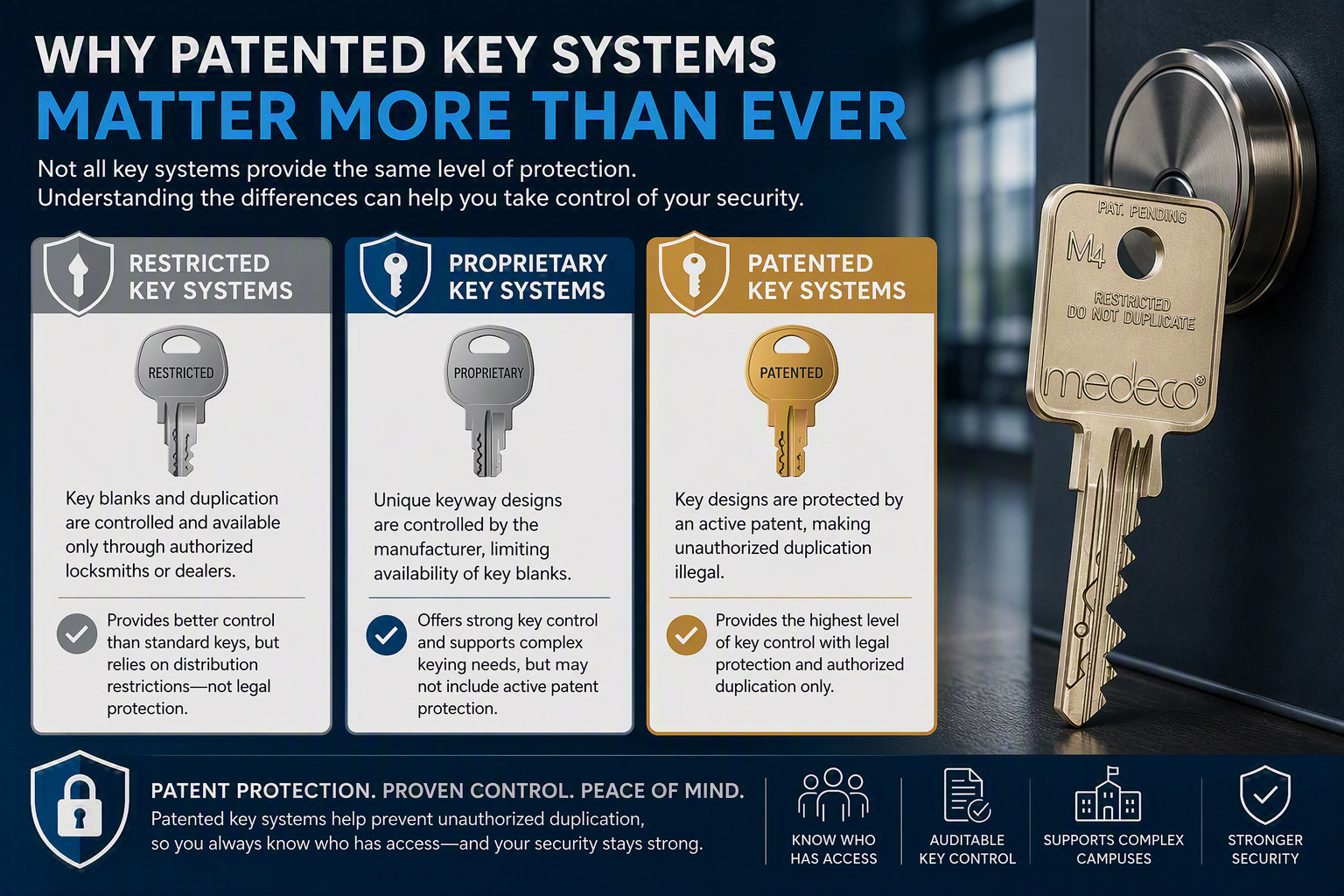
When organizations think about physical security, they often focus on doors, locks, cameras, and access control systems. Yet one of the most overlooked security vulnerabilities is much simpler: unauthorized key duplication.
A key system is only as secure as the control you have over the keys themselves. If duplicates can be made without your knowledge, your security plan may already be compromised. That's why patented key systems have become increasingly important for schools, healthcare facilities, commercial buildings, and government campuses seeking stronger control over access. In fact, protecting key systems from unauthorized duplication is one of the primary purposes of patented key technology.
Understanding Key System Types
Not all key systems provide the same level of protection. Understanding the differences between restricted, proprietary, and patented key systems can help organizations make more informed security decisions.
Restricted Key Systems
A restricted key system limits who can obtain key blanks and duplicate keys. Typically, only authorized locksmiths or dealers have access to the specialized blanks needed to create copies. This provides a higher level of key control than conventional systems where duplicate keys may be readily available.
Restricted keyways help organizations reduce the likelihood of unauthorized duplication, but their effectiveness often depends on distribution controls and agreements rather than active legal patent protection.
Proprietary Key Systems
Proprietary key systems utilize unique keyway designs developed and controlled by a manufacturer. Because these designs are not generally available on the open market, organizations gain greater control over who can access key blanks and create duplicate keys.
These systems can provide strong key management benefits and are frequently used in facilities requiring complex master key structures. However, proprietary designs alone may not provide the legal protection associated with active patents.
Patented Key Systems
Patented key systems combine controlled distribution with legal protection. The key design itself is protected by an active patent, making unauthorized manufacturing or duplication illegal. Patents are fundamental to protecting customers' key systems from unauthorized key duplication and maintaining key control.
In a patented system, duplicate keys can generally only be sold through authorized dealers and with appropriate authorization from the system owner. This added layer of accountability helps organizations maintain confidence in who has access to their facilities.
The Reality of Unauthorized Key Duplication
Many people assume that a key marked "Do Not Duplicate" cannot legally or physically be copied. In reality, standard keys are often duplicated with little difficulty because compatible key blanks may be widely available. Protecting key duplication is an essential component of an effective key control strategy.
Without proper key control, organizations may face questions such as:
- How many copies of a key exist?
- Who currently possesses them?
- Did a former employee return all issued keys?
- Have contractors retained copies after project completion?
Every unanswered question introduces potential risk.
How Patent Protection Strengthens Security
Patent protection creates a unique advantage because it adds both practical and legal barriers to duplication.
First, patented keys typically utilize protected key blanks that are not available through ordinary retail channels. Second, the patent allows the manufacturer to legally control who can produce duplicates and distribute blanks. Finally, authorized key duplication processes create accountability by requiring verification before copies are issued.
The result is a significantly higher level of key control compared to conventional key systems. Rather than relying solely on trust, organizations gain documented processes that help ensure keys remain under authorized management.
Why This Matters for Modern Facilities
Today's facilities face increasingly complex security challenges. Employee turnover, third-party contractors, growing campuses, and evolving compliance requirements make access management more difficult than ever.
Patented key systems help address these challenges by providing:
- Greater control over key duplication
- Improved accountability throughout the key lifecycle
- Support for large and complex master key systems
- Long-term protection through active patent coverage
- Increased confidence in overall physical security programs
For educational campuses, healthcare networks, and commercial enterprises, these benefits can be especially valuable because a single key may provide access to multiple buildings, departments, or critical areas.
The Bottom Line
The question is no longer whether your facility has a key system. The more important question is whether you have control over that system.
Restricted and proprietary key systems can improve security and key management, but patented key systems provide an additional layer of protection by legally safeguarding key designs and helping prevent unauthorized duplication. Patent protection remains one of the most effective ways to maintain key control and protect the integrity of a security program.
In an era where security depends on knowing exactly who has access, patented key systems matter more than ever.