Why Modern Buildings Still Struggle with Acoustics
Acoustics have become an increasingly important part of modern building design, especially for facilities where occupant comfort, wellbeing, and productivity are top priorities.
Healthcare facilities aim to create environments that support patient recovery and comfort. Libraries are designed to encourage concentration and study. Universities continue to invest in spaces that help students focus and learn. Across virtually every market, architects and facility managers are paying closer attention to how buildings support the people who use them.
Much of that effort focuses on walls, ceilings, flooring, and room layouts. Yet one frequently used building component is often overlooked when acoustic goals are discussed: the opening.
Doors are among the most heavily operated elements in any facility. In many applications, they may be used hundreds or even thousands of times each day. While each interaction is brief, those consistent, recurrent moments become part of the overall occupant experience. As building owners place greater emphasis on user experience, those recurrent interactions with door hardware can either enhance or detract from the overall environment.
Acoustics Are About More Than Sound Levels
When people think about acoustics, they often think about reducing sound. In reality, acoustic performance is far more nuanced.
The way occupants experience a space is influenced by many factors, including how sounds are perceived over time and how frequently they occur throughout the environment. This is especially important in settings where concentration, recovery, or comfort are priorities.
Consider a hospital patient room, a university library, or a behavioral health facility. For these settings, the goal is to support an environment that aligns with the purpose of the space. Repetitive, jarring, or highly mechanical sounds from other occupants interacting with door hardware can detract from the user experience in these spaces.
The Opening Plays a Larger Role Than Many Realize
For decades, door hardware specifications have focused on essential priorities such as life safety, accessibility, security, durability, and code compliance. Those factors remain critical to every successful opening.
Today, many project teams are expanding the conversation. Yet when door hardware is overlooked in acoustic planning, buildings may struggle to achieve a quieter environment.
By considering the opening as part of a broader acoustic strategy, facilities can take a more comprehensive approach to creating spaces that support the people who use them every day
Supporting Acoustic Goals Through Hardware Selection
As awareness of acoustic performance continues to evolve within the industry, hardware manufacturers are exploring new ways to support these design objectives.
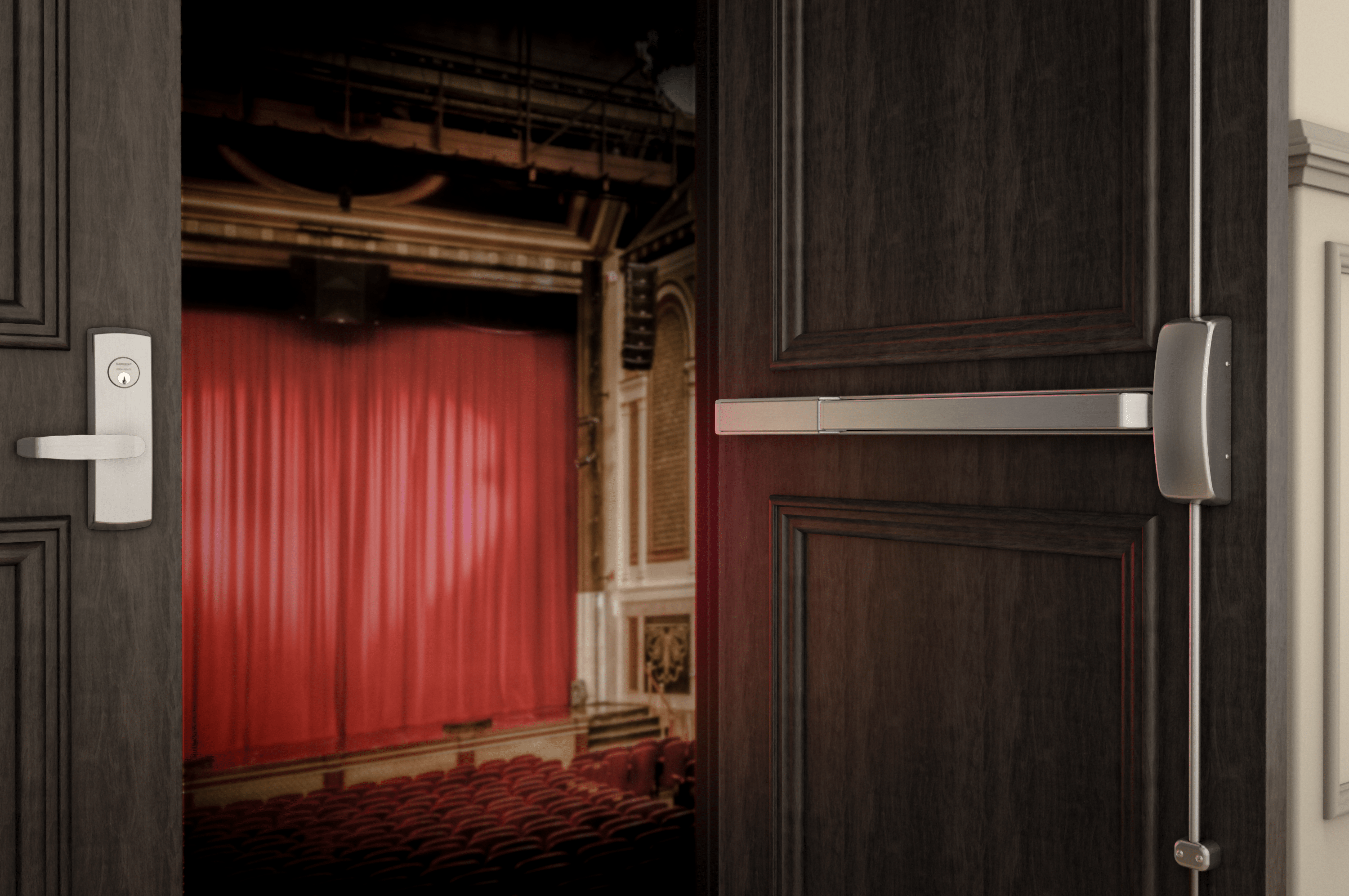
The new SHH- option for SARGENT's PE80 Series exit devices was developed with these considerations in mind.
Designed for applications where acoustic performance and occupant comfort are important factors, the SHH- option provides architects, hardware consultants, and facility managers with an additional option when specifying openings for sound-sensitive environments. By incorporating dampening technology that slows retraction and reduces the sharp clang often associated with exit device operation, it creates a quieter, more refined user experience.
In these and other sound-sensitive applications, the opening can play a meaningful role in supporting broader project goals.
The Details Matter
The most successful buildings are often defined by details occupants never consciously notice.
A study space that feels conducive to focus.
A patient environment that supports comfort.
A facility that feels thoughtfully designed from one opening to the next.
These outcomes are rarely the result of a single design decision. They come from carefully considering how every component contributes to the overall experience.
As acoustic expectations continue to grow, facility teams are looking beyond traditional design elements and taking a more comprehensive view of building performance.
The opening deserves to be part of that conversation.
With the introduction of the SHH- option for PE80 Series exit devices, we are helping architects and facility professionals align hardware decisions with the broader goals of occupant-centered design, proving that sometimes the smallest specification decisions can contribute to the biggest improvements in how a space is experienced.