Designing Low-Touch Openings for Modern Facilities
Minimize hand contact at the door without compromising security, accessibility, or code compliance.
Explore mechanical and electrified door hardware solutions that reduce touchpoints, support accessibility, and improve movement throughout commercial facilities.
Considerations for Low-Touch Door Hardware
Want to reduce hand contact throughout a building? Low-touch hardware enables doors to be operated with minimal manual effort. This approach significantly improves hygiene while simultaneously expanding accessibility. Best of all, low-touch openings won’t sacrifice security or code compliance. Learn how and where to specify low-touch openings.
How Do Low‑Touch Door Openings Work?
A low‑touch opening minimizes the amount of direct hand contact required to move through a doorway. Hands-optional operation can be achieved through a number of design choices: electrified hardware, mechanical options, or a mix of system components. These are an upgrade over only traditional levers or pushpads for entry and exit.
Why focus on low-touch doors? Doorways and door hardware surfaces are some of the highest touchpoints in any facility type. It’s not only the main entrance but every door that staff or visitors encounter as they navigate through the building. Low-touch openings help support safe and efficient circulation.
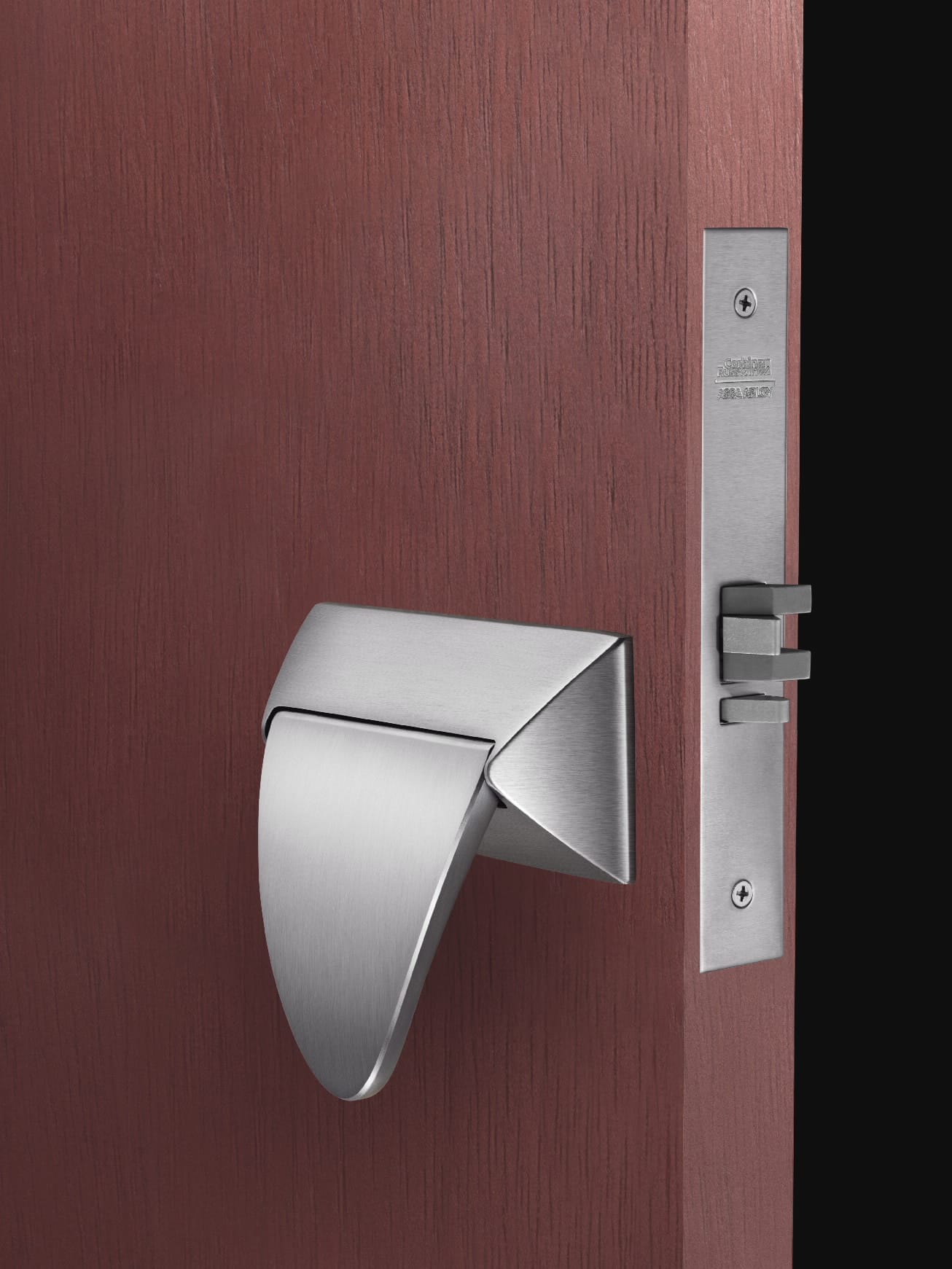
For some use cases, a mechanical solution designed for elbow, forearm, wrist, or hip operation will suffice. The ML2000 Series mortise lock with HPSK Push/pull trim has a paddle shape that is specifically shaped for this type of hands-optional use. It can also be mounted horizontally or vertically to best suit how users typically reach for hardware. The smooth edges are also ideal for healthcare and education settings as they reduce clothing snags.
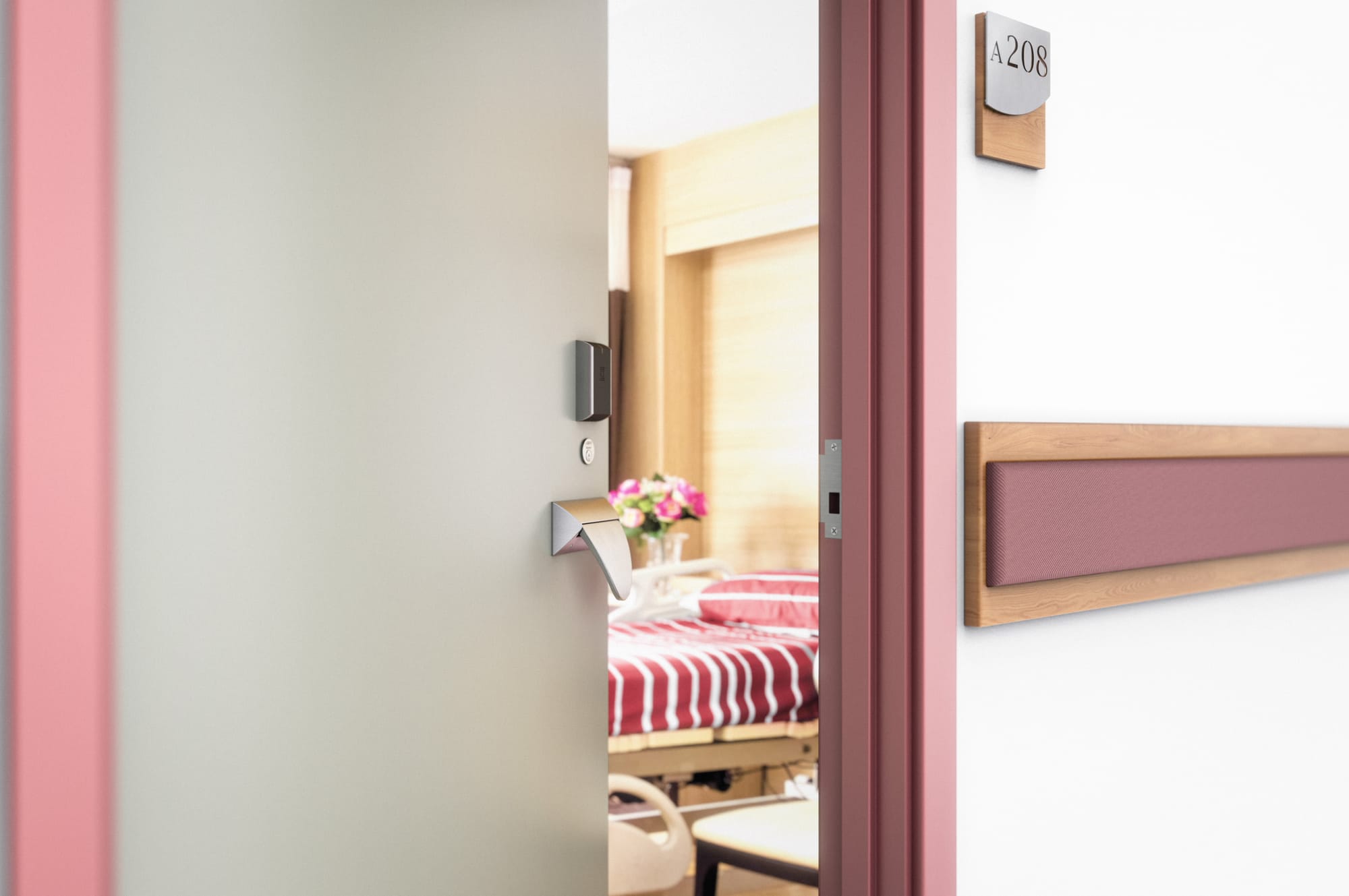
For applications requiring a higher level of integration, electrified hardware may be the right fit. For example, a motorized electric latch retraction (MELR) automatically retracts the latch. This electromechanical solution is available in both mortise locks and exit devices as well as low-energy door operators, offering similar functionality across different hardware types depending on the opening. Users activate the retraction through devices such a wave-to-open sensors, key fobs, wall actuators, or proximity cards—all of which satisfy the code requirements for a Knowing Act, or a deliberate act by an occupant to activate a door operator.
Common Applications for Low-Touch Hardware
Which low-touch option is right for your facility? It depends on traffic volume, system integration requirements, and accessibility considerations. Every building type – from healthcare and schools to office and research labs – has openings where the circulation experience could be enhanced by having the choice to avoid touching door hardware.
|
Space Type |
Door
Examples |
Considerations |
|
Healthcare –
shared spaces |
hallways, waiting rooms |
These areas are
constantly used by patients, visitors, and staff. Users are more likely to have limited mobility or use
assistive devices. |
|
Healthcare – recovery
areas |
Patient rooms,
treatment bays |
Employees often
carry or push an item that occupies their hands, such as a medication tray, a
cart of diagnostic equipment, and wheeled IV poles. Patients are
frequently transferred on hospital beds or in wheelchairs. |
|
Research
facilities |
Laboratories |
Staff can move without pausing to set items down or
increase contamination risks. |
|
Schools |
Corridors,
classrooms |
Students and
staff will be supported by streamlining passthrough times. |
Lastly, all buildings have spaces where people consistently congregate. Low-touch hardware enables users to enter and exit with nominal contact.
Shared amenities like kitchens and breakrooms have additional hygiene concerns, especially with the presence of food.
Spaces where people need to wash their hands, chiefly restrooms, can also be a hotspot for germs.
High-traffic openings such as main entrances and corridors have surfaces that nearly everyone touches.
Low-touch door openings are one of the most practical ways to reduce unnecessary contact throughout a facility. There is a variety of mechanical and electrified options available for hands-optional design. Our ML2000 Series mortise lock with HPSK Push/pull trim and ML2000 Series MELR mortise locks are retrofit ready, ADA compliant, and rated for fire doors. They are also ANSI/BHMA Grade 1 certified and engineered with robust environments in mind.
These solutions not only protect hygiene but enhance circulation.
Interested in learning how different low‑touch door technologies can work together in your facility? Fill out the form below to connect with one of our experts.