Why Exit Devices Belong in the Acoustic Design Conversation
Acoustic performance has become an increasingly important consideration in building design, particularly in environments where occupant comfort, wellbeing, and productivity are priorities.
Healthcare facilities strive to create settings that support patient recovery. Libraries are designed to encourage focus and quiet study. Universities invest in learning environments that help students concentrate and engage. Across nearly every market, architects and facility managers are paying closer attention to how buildings support the people who use them every day.
Much of that attention is directed toward walls, ceilings, flooring, and room layout. One critical building element, however, is often overlooked in conversations about acoustic performance: the opening.
Doors are among the most frequently used components in a facility, often operating hundreds or even thousands of times a day. While each interaction may seem insignificant on its own, those repeated experiences contribute to how occupants perceive and experience a space over time.
Acoustic Performance Is About More Than Noise Reduction
When people think about acoustics, they often think about reducing noise levels. But acoustic performance extends beyond volume alone.
How occupants experience a space is influenced not only by how loud a sound is, but also by how frequently it occurs and how it is perceived over time. Repetitive, abrupt, or mechanical-sounding noises can become part of the daily experience of a building, particularly in spaces designed to promote focus, comfort, or recovery.
Consider a patient room in a hospital, a university library, or a behavioral health facility. In these environments, the goal is to create a setting that aligns with the purpose of the space. Sounds generated by everyday interactions, including door operation, can either support or detract from that experience.
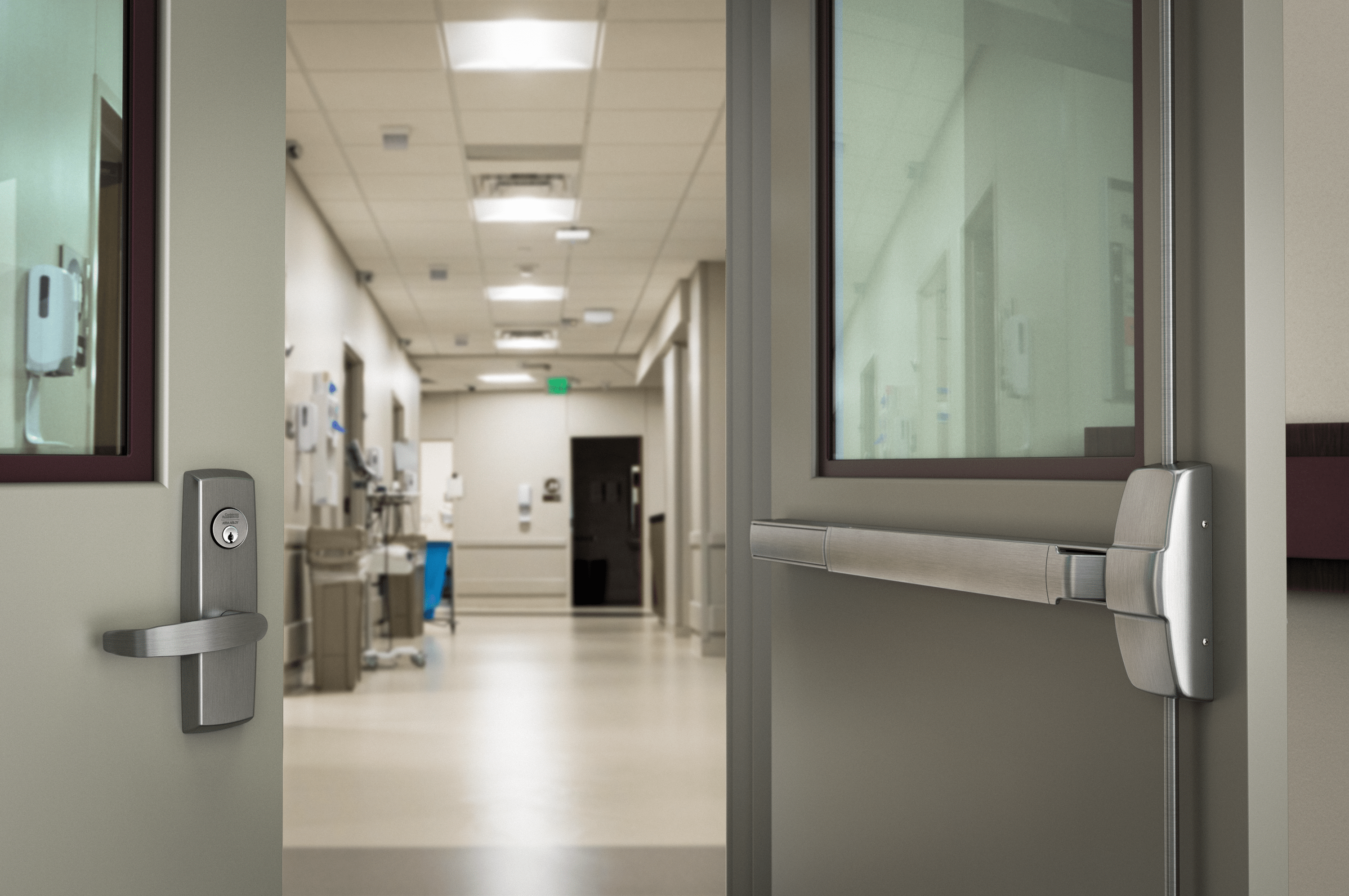
Every time an exit device is activated, occupants hear and experience the sounds associated with latch retraction and device return. While a single occurrence may go unnoticed, repeated interactions throughout the day can influence how a space feels and functions.
The Opening Plays a Bigger Role Than Many Realize
For decades, door hardware specification has focused on essential requirements such as life safety, accessibility, security, durability, and code compliance. These fundamentals remain critical to every opening.
Today, however, many project teams are taking a broader view of performance. Alongside traditional requirements, designers are increasingly considering how building components contribute to the overall occupant experience.
That includes the opening.
When door hardware is excluded from acoustic planning, facilities may miss an opportunity to support the environment they're working to create. Recognizing the opening as part of a comprehensive acoustic strategy allows architects and facility managers to take a more holistic approach to building design.
Supporting Acoustic Goals Through Hardware Selection
As interest in acoustic performance continues to grow, hardware manufacturers are developing new solutions that address the sounds associated with everyday door operation.
The SHH option for Corbin Russwin PED5000 Series exit devices was developed with this goal in mind.
Designed for applications where occupant comfort and acoustic performance are important considerations, the SHH option incorporates dampening technology that slows device return and reduces the abrupt metallic sounds commonly associated with exit device operation. The result is a more refined operating experience that complements the goals of sound-sensitive environments.
For architects, hardware consultants, and facility managers, it provides another tool for supporting acoustic design objectives while maintaining the safety, security, and performance expected from a commercial opening.
The Details That Shape Occupant Experience
The most successful buildings are often defined by details occupants rarely stop to think about.
A learning environment that feels conducive to concentration.
A patient space that promotes comfort and recovery.
A building that feels thoughtfully designed from one opening to the next.
These outcomes are rarely the result of a single design decision. Rather, they come from carefully considering how each component contributes to the overall experience of the space.
As expectations around acoustic performance continue to evolve, designers and facility teams are looking beyond traditional sound-control measures and taking a broader view of what influences the way a building feels to the people inside it.
Discover how innovative door hardware solutions are helping architects create environments that feel more comfortable, refined, and purpose-built for the people who use them.