Simple Ways to Incorporate Low-Touch Door Hardware
Low-touch door hardware is an important feature that supports hygiene, accessibility, and a positive occupant experience.
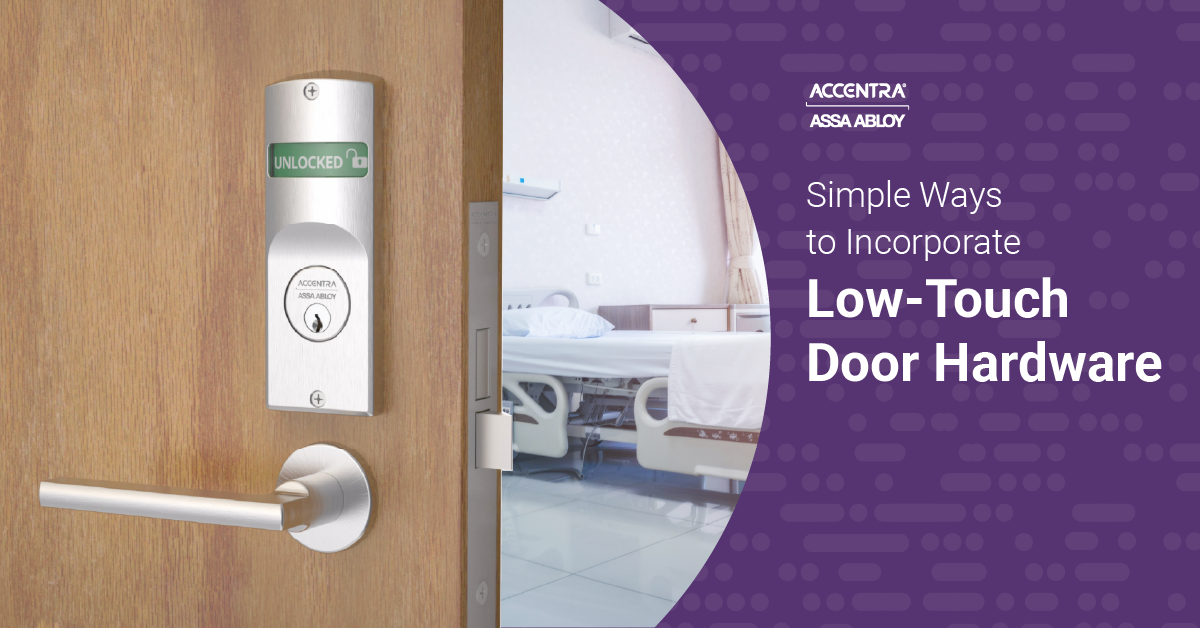
Hands-optional door hardware isn’t just a nice amenity – it’s an important feature that supports hygiene, the occupant experience, and even accessibility. It helps reduce the number of surfaces that users are required to touch in high-traffic buildings. Whether for new construction or retrofits, property owners can upgrade their door hardware for minimal contact with either electrified or mechanical options.
Supporting the User Experience
Contactless technology has become the standard in many facets of daily existence. It’s everywhere from restroom fixtures to tap-and-go payments. Low-touch surfaces remain a priority in busy buildings like offices, schools, mixed use properties, and healthcare. Consider that these environments have numerous surfaces that occupants touch multiple times a day. Especially for entrances and exits, it’s beneficial to have one less place that requires physical contact.
Low-touch options can be offered through an electromechanical solution like motorized electric latch retraction (MELR) or as a status indicator on a mechanical lock. Both options give occupants the discretion if or when they want to physically interact with hardware.
Motorized Electric Latch Retraction (MELR)
A motorized electric latch retraction (MELR) is an automated way to provide hands-optional operation. This electromechanical device remotely retracts a latch in 30 seconds so users do not need to push or pull the door. It also relatches the door once it returns to the close position. The entire sequence is accomplished without having to touch a lever or exit bar.
ASSA ABLOY ACCENTRA® offers MELR on its 6000 and 7000 Series exit devices as well as the 8800 Series mortise lockset. The technology is well suited for single swing doors or pairs of doors, such as:
- Main entrances
- Corridors
- Assembly spaces like theatres, cafeterias, and gymnasiums
- Waiting rooms
From a code standpoint, MELR eliminates a touch point while also satisfying the requirements for a Knowing Act. This is when a user chooses to activate a door operator. They can do so using proximity cards, wave-to-open sensors, or key fobs. Another low-contact option is to use an elbow, forearm, or hip to engage a wall actuator.
The ability to remotely engage the door also supports accessibility. It’s a type of universal design that supports users of all backgrounds, whether they are assisted by a mobility aid or a caregiver, delivering packages, or pushing medical equipment.
Status Indicators
A status indicator is a display window that shows if the door is locked or unlocked. It features color coding or bold text that is easy to read while approaching. Users can discern at a glance if a space is vacant or not, so there is no need to touch the door handle. This is also optimal for any occupant within since they won’t experience the stress of hearing or seeing hardware rattled.
Status indicators are typically paired with rooms that need a degree of privacy: single-user restrooms, quiet rooms, nursing mother’s rooms, and classroom doors. The spaces often have overlapping concerns about cleanliness, especially when handwashing stations are present. Status indicators empower these users to reduce unnecessary surface contact.
ASSA ABLOY ACCENTRA offers a full suite of status indicators on mortise, cylindrical, and deadbolt locks as well as retrofit kits that replace competitor products.
Interested in learning how different low‑touch door technologies can work together in your facility? Fill out the form below to connect with one of our experts.